Categories
Uncategorized

Logo Simplification: Losing Charm

A logo is one of the most important aspects of company representation and customer recognition. Over the years, many have chosen to ‘update’, ‘revamp’, or ‘improve’ their logos.

In the last few years, it seems many logos are getting more and more simplified. While the intention is to give a fresh new look, change is not always good…or well received by the public.
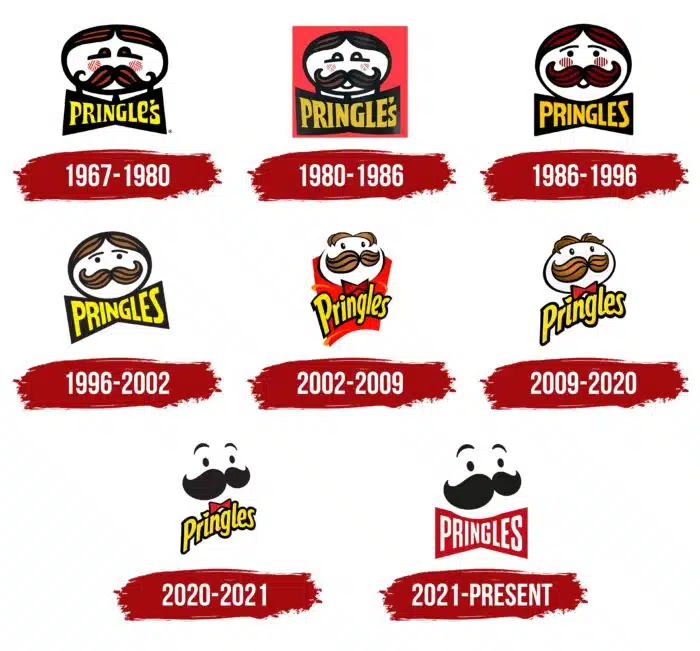
Pringles Logo Over Time

One of the most discussed examples of this is the Pringles logo. From 2020 to the present logo, customers have expressed their dislike due to its simplicity.

The brown hair and mustache detailing were removed, the yellow recognizable lettering changed completely, and an overall ‘simpler’ design was created.

Mr. P (the Pringles mascot) seems to have lost so much of its recognizable charm. He at least gained eyebrows…but at what cost?

Categories
Design

AI in Adobe: Design Jobs in the Future 

AI has been the topic of discussion for designers, many worrying about how this technology will affect their jobs in the years to come.

AI has become such a popular topic of discussion as its use can be seen more and more through its integration in industry use. This is most apparent in Adobe, the industry standard, which has begun its push towards generative AI in its products.

On one end, people are excited for the boost in efficiency that AI promises. Many feel it can be used as a tool to aid designers’ workflow by cutting down work time and allowing more energy to be placed in other areas of a project. On the other end, people are worried designers could be replaced completely. Fearing that AI will be able to do all tasks designers can do, but at a much faster rate.

It is important to remember that designers are a source of originality and creativity, something that AI is not able to [currently] do. With this shift in possibilities, designers will need to make the most of AI.

While AI may be this new and promising technology, designers will not be replaced completely. Keeping up with this technology and using it to their advantage will be crucial for those in the industry.

Categories
Tech

Adobe’s Inclination Towards AI

Adobe is the industry standard, with its variety of products, it is the leader in its field. With the rise of Artificial Intelligence (AI), Adobe can be seen pushing for the integration of its own generative AI into its products, but why?

The first reason that comes to mind is the simple fact that Adobe is the standard, the leader across industries. With the rise of AI, Adobe wants to be at the forefront of this new technology. In order to keep up with the ever-changing realm that technology is, they need to stay on top of what’s currently up and coming.

Adding to this is the prospect of more users of their products. Anyone with an interest in AI and its capabilities is more inclined to explore what Adobe has to offer.

Not only does it interest new users, but those currently using Adobe will also have the opportunity to explore its generative AI. Adobe themselves states, “Whether you’re using AI or generative AI, this technology can help make your work easier, faster, and more fun, and it might even help you discover new artistic directions” (AI for Graphic Designers, 2024).

Categories
Design

AI in Adobe: Detrimental for Graphic Images

The creation of graphic images has seen an increase in the use of AI within Adobe products. Artificial Intelligence, more commonly known as AI, has been at the center of conversation for graphic designers using Adobe products.

Adobe is an industry standard, one that has been highlighting its integration of AI into its products. With this, comes concern for the value of designers in creating graphic images, sourcing of data, ownership, and copyright.

By typing a string of words, generative AI brings to life multiple variations of the inserted prompt. Adobe explains, “Trained on millions of data points, these models learn how to generate images based on simple text prompts…The more data they’re trained on, the better these models get, so that now you can generate impressive images just by typing a few words into a prompt field” (AI for Graphic Designers, 2024).

Where do these images (data inputted) come from? Do original creators give permission for their works to be used in AI? Who owns the generated graphic images when made by AI? Are designers necessary now that AI can do it?

These are just a few of the questions that many in the industry are asking themselves. As AI continues to expand, not just affecting designers and artists, many are keeping an eye on this new technology that is reshaping multiple industries.